

3·
1 year agoWhales eat the bones into sand.
Whales eat the bones into sand.

Using “uncomfy” instead of uncomfortable. I recognize this one is fully style, but it’s like nails on a chalkboard. Break the entirely fake rules of grammar and spelling all you want, but have some decency when it comes to connotation.
Comfy is an informal and almost diminutive form (not technically, but it follows the structure so it kinda feels like it) of comfortable. You have to have a degree of comfort to use the less formal “comfy,” so uncomfy is just…paradoxical? Oxymoronic? Ironic? I’d be ok with it used for humor, but not in earnest.
Relatedly, for me “comfy” is necessarily referring to physical comfort, not emotional. I can be either comfy or comfortable in a soft fuzzy chair. I can be comfortable in a new social situation. I can be uncomfortable in either. I can be uncomfy in neither, because that would be ridiculous.
FWIW I would never actually correct someone on this. I would immediately have my linguist card revoked, and I can’t point to a real fake grammatical rule that would make it “incorrect” even if I wanted to. But this is the one and only English usage thing I hate, and I hate it very, very much.
Both excellent, but I have to put The Body at the top. I think that’s where I realized how excellent some of the actors in this show were, SMG in particular. Anya’s monologue has stayed with me in a way nothing else from tv or movies ever has. Would I rather enjoy a OMWF singalong? Yes, any day. But The Body felt like a one of a kind thing.
Yeah in most North American dialects it’s produced with a tap/flap, not a glottal stop. Unfortunate, because it would be very fun if it were true for us.
When I loved this song as a teenager I did understand that it was about the girlfriend’s suicide, but I missed the abortion piece. I assumed the “baby’s breath” referenced wedding flowers and “shoe full of rice” was like the rice you throw on newlyweds.
Turns out the only true part of the story is the abortion, which is a rough topic but not inherently tragic. TBH these days a song about abortion could be considered wishful thinking. (Or even celebratory? Cue the Sextina Aquafina abortion song from Bojack.) The suicide is poetic license, but does make for a beautiful narrative of guilt and naïveté.
SleepPhones are great! They are super comfortable and secure (I toss and turn a lot, anything in-ear never had a prayer). I wear mine working out too.
Under-appreciated advantage over cheaper, similar competition: super easy to clean. The mechanism slides in and out of the band, which is machine washable. You’re not just building up sweat and oil might after night.
Oh 100% absolutely. I mean the gentrification of Hyde Park and Woodlawn with active, deliberate harm to the black community started at the University’s inception in 1898 (1895? 92? They keep changing the “established in” date on all their merch and propaganda, it’s hard to keep up) and continues to this day with no signs of slowing.
I also should have specified that if we’re talking about student/faculty attitudes the “real” UChicago community does not or at least should include Booth and the psychopathic econ department. That’s where all the money comes from (because it’s evil) but everyone except admin hates them. Also I’m pretty sure they would argue “community” means communism and community of any kind should be abolished in favor of a social free market or some shit, whatever garbage they are peddling these days.
Important additional context that didn’t make it into this tweet, this donation was explicitly directed toward promoting “free inquiry and expression” at UChicago. Decades ago that was a legit strength of UChicago that really was pretty ideologically neutral, and that history gives them a phenomenal tool for spinning dog whistles and ultra conservative policies as part of “the life of the mind.”
Here’s the announcement email from the University’s president yesterday.
Worth noting that Eman Abdelhadi is faculty at UChicago, speaking out against her own employer alongside hundreds of other faculty. Eman is particularly adept at making sure every time they use “free inquiry and expression” as a conservative dog whistle it gets thrown back in their faces. (She’s also just kind of a badass.)
UChicago admin work very hard to promote this image of the school as a bastion for “sane conservatives” by taking stances diametrically opposed to the what the students and faculty actually stand behind. The real UChicago is anti-genocide, pro-union, and knows that promoting free speech doesn’t mean tolerating hate speech.
I use this example to introduce formal and functional approaches to topics in the social sciences. Any argument you try to make within the debate ends up including a variant of “…because sandwiches [abstraction about what formally defines a sandwich]”, which itself presumes that the “right” way to carve up the world is in categories of form. You could also conceive of sandwiches functionally, where something isn’t a sandwich if we (some cultural or linguistic group) just don’t think of them that way.
From a functional view, the very fact the debate exists at all means hot dogs aren’t sandwiches, cereal isn’t soup, pop tarts aren’t ravioli, etc.
Then I make them think about it in contexts like language, Durkheim, and policy making and watch their little minds explode.
I absolutely consider Phantom Tollbooth a masterpiece. There’s nothing else like it, and it has extraordinary persistence.

I spent longer than I want to admit trying to make a pun with AI as “the elephant in the room” to talk to about to my students about which ways of using LLMs are unacceptable/acceptable/encouraged on the first day of class. I couldn’t do any better than AI-lephant. I even asked chat GPT for help. Very disappointing.

I thought it was the Shakers who were fully celibate, not the Quakers. I’m reading through the Quakers’ wiki page now and not seeing anything about views on sex/procreation. Any suggestions where to find more about that?
I’m not trying to challenge you, I’d just like to learn more if I’ve missed something here.

Finally playing Dave the Diver after getting recommendations from everyone I know since it came out. “Dive for fish and make sushi.” Seemed pleasant enough but I didn’t get why people talked about it in the same tone as like, Stardew Valley.
I get it now.
The choice is “help people from systematically disadvantaged groups” or “don’t.” I’d argue that the “don’t” would be the easier choice.
Extend to gender, ethnicity, LGBTQ, whatever…the key is the “systematically.” We can’t assess relative (dis)advantage at an individual level, but we can recognize it at a systemic level and develop programs that counter it systemically.
I’d say X is more like “disproportionately and systematically disadvantaging people of color.”

If you’re in a one on one conversation with another person where the intention of both parties is for you to learn something from them, the idea that you should just sit and wait and hope is silly at best and actively detrimental at worst.
You do want to avoid interrupting at awkward moments so you don’t make them forget what they’re saying or irritate them with a question they are going to answer in the next two words. But it’s pretty simple to avoid those (or more importantly, to demonstrate to the other person that you are INTENDING to avoid them, even if you make mistakes). Three big things:
I study conversational gestures and backchannel a for a living, so I’ll add that my personal favorite tool here is a modified shrug. Tilt your head a little, extend your upturned hand or pointed finger out toward them (but like, softly and not at or near their face, just in neutral space), maybe raise one shoulder a little optionally, and just hold it there. They will read it as a request to metaphorically pass the turn to you the same way they’d pass you the salt.
One of the biggest cliche revisionist histories I know of is “Jack of all trades, master of none; often much better than master of one.” It’s an interesting one because it’s been retconned twice.
You’ll hear people respond to first line by saying “um actually the second line of the poem totally changes the meaning.” Yes, it did change the meaning when it was added in the 21st century, 400-500 years later.
Then you’ll hear people one step closer to accuracy who correct “Jack of all trades” by reminding the speaker that it’s not a compliment because it ends with “master of none.” Except the master of none bit wasn’t used until the 18th century, and the second revision with the couplet may actually closer in meaning to the original!
The original, simple phrase “jack of all trades” was first used in that form in the 16th century, possibly as a reference to Shakespeare, and definitely as a phrase that was intentionally ambiguous about whether it should be interpreted as a compliment or insult.
https://en.wikipedia.org/wiki/Jack_of_all_trades?wprov=sfti1#Origins

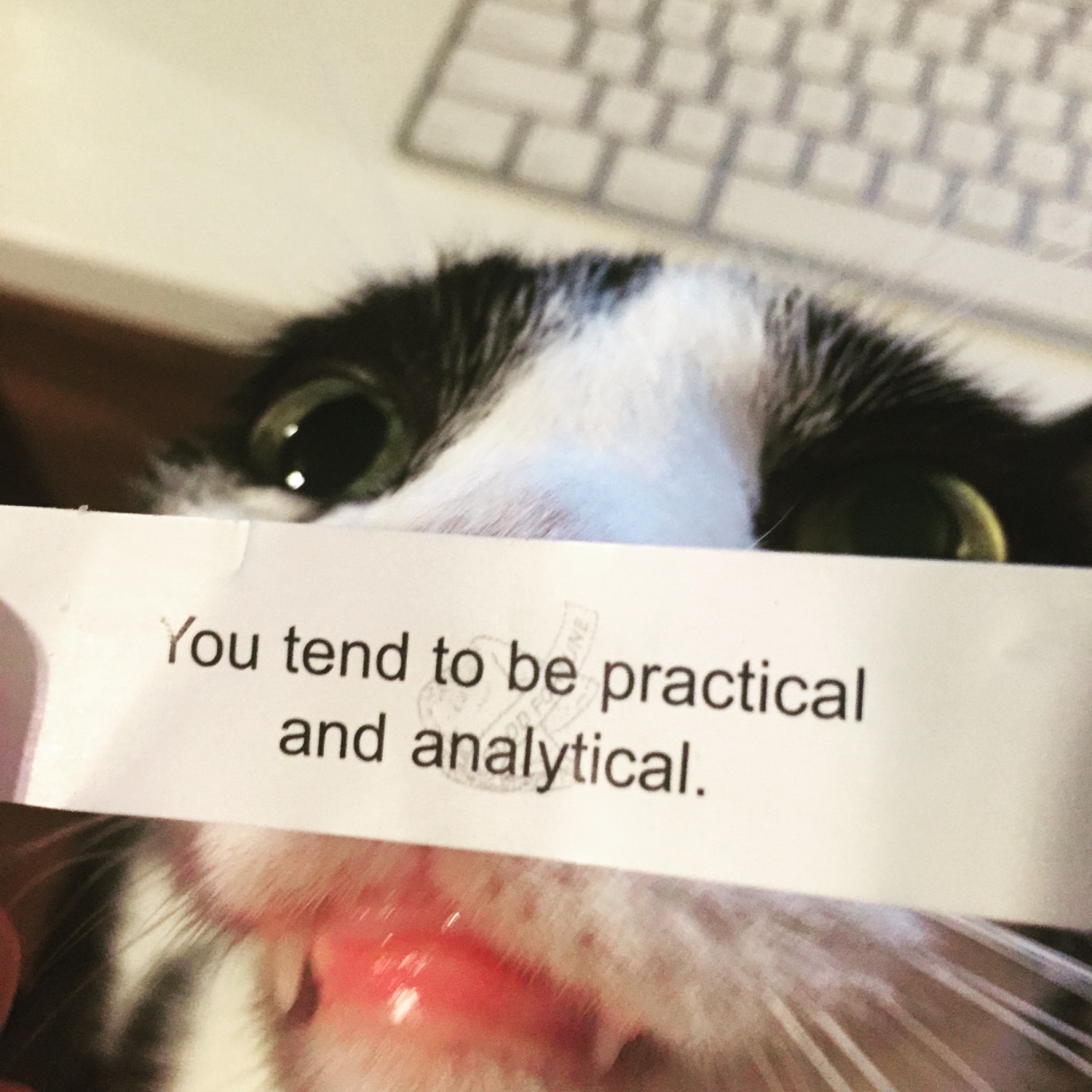
Linguists hate grammarly