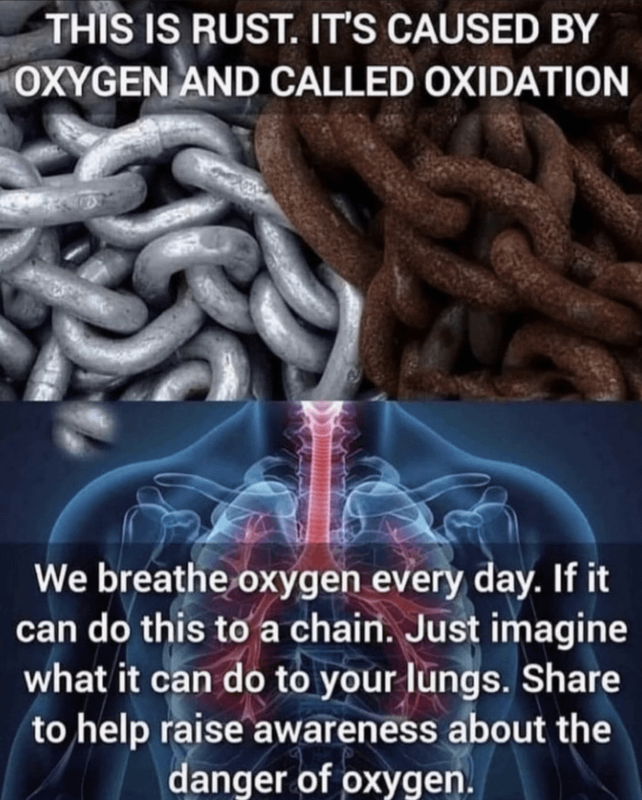
There are quite a few sci-fi stories and short stories built on a similar concept. One of my favorites is an alien ship lands on a random farm in the US and (leaving a lot of details out, read the book!) it comes to light that the aliens normally live at insanely hot temperatures like 900F (480C) and consider Earth an “Ice World” (that’s also the name of the book). Anyway, one of the catches in the book is that farmer figures out the alien wants to trade (again skipping a lot of details) but all he has on him that he can give up is a cigarette (the farmer doesn’t know it’s super hot inside the ship). He does the trade and we later find out that most of the galaxy is INSANELY vulnerable to being 100% completely utterly addicted to nicotine. When the alien took in the cigarette it instantly vaporized and sent the nicotine into the air and they breathed it and became instantly addicted worse than any opiod addiction IRL.
You didn’t mention the book name, so how are we to read it?
I did say the name in my post… It’s called Ice World and it’s an older sci-fi book from either 50’s or 60’s. It’s only about 200 pages long.
The ‘Death Breathers’ thing is a primary plot point /story device / world mechanic of the ludicrous, over the top, MARS ATTACKS! from 1996.
Just any case anyone hasn't seen it and wants to avoid spoilers, don't open this
Basically, it barely makes any actual sense, and… thats part of the point, to be a parody of how stupid 50s schlock alien movies were…
The Martians only breathe Nitrogen, and seem to asphyxiate if their helmets and pressure suits are removed or comprimised.
This makes no fucking sense whatsoever for multiple reasons:
Nitrogen is much, much less chemically reactive than Oxygen, and it seems quite unlikely that any kind of Nitrogen based metabolism could evolve basically anywhere, in any organic being, because of this…
Earth’s atmosphere is like… ~70% Nitrogen.
Do… they… need literally 100% Nitrogen?
It… doesn’t seem like the oxygen in the atmosphere is like… causing them to internally combust/melt the way say mustard gas, chlorine gas, makes a human melt from the inside out, by nature of being way way way more chemically reactive than oxygen.
What they do is act like … they’re asphyxiating, they gasp for air, not cough and vomit, eyes watering and burning/melting the way mustard gas fucks up people.
Also, at one point, a ludicrously disguised as a human, martian… is able to go undercover, with no protective pressure suit… because they have… chewing gum, that… releases nitrogen.
Again, if oxygen had a similar effect on them as chlorine gas has on us… this disguised martian should… still be basically burning/melting from being exposed to all the oxygen, and thats overlooking the ludicrousness of… nitrogen releasing chewing gum
That’s the exact theme of many stories on r/HFY
Unrelated but the bottom navbar in that screenshot makes me long for the Alien Blue days of Reddit. I also just miss that iOS design (along with the OS X Mavericks design)
Dude, I just had to use an old Mac with OS10.11 on it (I know not that old) to recover a laptop in target disk mode.
It still has the widgets!
I miss the widgets.
Imagine what it can do to software
Those damn electrons!
On the topic, as oxidation is a pretty prevalent negative side effect of living, our body has multiple mechanisms to deal with it, no? So my question is: where do the “antioxidants” that we can eat come into the picture here? Are they like preventing oxidation from even occurring, or are they like the shields that our cells use to protect themselves from oxidative stress, or what have you?
Oxidation is the loss of electrons, whereas reduction is the gain of electrons. The mnemonic is OIL RIG: Oxidation Is Loss, Reduction Is Gain.
Oxygen is highly electronegative (second only to fluorine), meaning that it will strongly attract electrons. So, oxygen is good at oxidizing things. It’s good at stealing their electrons. (When the oxygen takes the electron, the oxygen becomes reduced!)
The reason that oxygen is so important in your body for respiration is because of its high electronegativity. It is used as the final electron acceptor in a chain of chemical reactions that are used to convert high energy molecules that you’ve eaten into different high energy molecules that your body can use.
Think of the analogy of a staircase and a ball. The ball is an electron and the stairs are energy states of different molecules along the metabolic pathway. As the ball goes down the stairs, the electron loses energy (which is usually converted to ATP or NADH). At the bottom of the stairs is oxygen, once the electron gets there, it doesn’t have anymore potential energy to lose, unless maybe you have some fluorine around. The final, reduced state of oxygen in this pathway is carbon dioxide. It’s no longer useful for respiration and thankfully can just be exhaled. How convenient!
An oxygen missing an electron (an oxygen radical) is highly reactive. This is not good. It’ll just steal an electron from whatever molecule is nearby. That may be DNA or any other molecule that it’s in your best interest to keep intact. Antioxidants are helpful as electron donors, neutralizing radicals before they do damage.
antioxidants are our internal sacrificial anodes?
Ok, I’m going to make a new nutritional supplement: “oops! all electrons!”
Cell mechanisms cause oxidative stress in the body which can lead to inflammation and faster aging. Antioxidants provide the body with an easy way to neutralise the bi-products.
I actually thought about this a few years ago, is it possible that we age because of oxidation to some degree? Is there a way to prevent that? I thought about it, how blood can rust and just had the connecting thought but I’m not smart enough to know if there’s any actual correlation.
Edit: Got some really cool responses out of this to think about, thank you everyone!
Pretty sure oxidation plays a major role in aging, but can’t tell you the exact mechanism, I have no idea about it.
But about the blood rust idea, I don’t think that can work, cause we don’t have just iron particles that can directly interact with oxygen just floating around in our blood, we have a complex (I.e. hemoglobin) that contains significant amounts of iron, which somehow makes it really good for binding to and carrying oxygen.
Deviating a bit, carbon monoxide poisoning is really akin to suffcation iirc, cause it binds and occupies the hemoglobin, effectively reducing the amount of oxygen that can be carried by your blood.
However, do fact check me, I might be wrong about something…
Edit: BTW, it seems that “oxidation” might not be the right term to use here, so do understand that I am referring to free radicals here.
I’m no expert but I’m fairly sure that is basically true in a way. As per zr0’s top-level comment. Forms of life that can make do with less cellular respiration, for example by using external sources to regulate temperature (cold- blooded), don’t need to invite as much oxygen into their cells, and so they get less weird damage over time. Mammals in general have not adopted this strategy.
I’ve currently been reducing my oxygen intake. My wife keeps telling me it’s impossible and my doc says I’ll supposedly die, but they’re just hating on my progress.
This is a valid athletic technique. Usually achieved by training at altitude.
Doesn’t it only work if you then return to a lower altitude? I wonder how long the benefits last for.
Now that I think about it, I don’t actually know how this even works. Well I know what I’m going to go read about next.
Edit: My findings:
-
At high altitude, cardiac output (the overall rate of blood pumped by the heart) increases, largely due to increased heart rate. This increased heart rate reduces as one acclimatises to high altitude (though I’m unsure of if it returns to baseline. It appears to be complex, and at least somewhat differing person by person. These individual differences may explain why some people experience health problems at high altitude, beyond the initial ill feelings caused from first arriving somewhere that’s high altitude)
-
The stroke volume (volume of blood pumped by each beat of the heart) is lower at high altitudes. This does improve as one acclimatises, but not entirely. This seems to be affected by blood pressure stuff, such as reduced plasma volume at high altitude. It seems to be complex enough that we don’t fully understand how the various regulatory stuff works.
-
Most of the acclimatisation occurs by increasing the number of red blood cells in the blood. The hormone erythropoietin, which usually exists at a low level in non-hypoxic conditions, stimulates the production of new red blood cells. At high altitude, the level of erythropoietin in the blood rises to around 1000 times its baseline level. Increased production of red blood cells happens for a few weeks, by which point, there is enough to make up for lower oxygen levels at high altitude.
-
When returning to low altitude, it appears that the changes back to the baseline happen over a similar timeline.
Tangential fun fact: a red blood cell has a lifetime of around 4 months. A single red blood cell travels around 400 miles before it is old enough to be recycled by the body.
Its also said that smokers are used to having less oxygen intake so if you throw a smoker and a non smoker on a mountain for a night, the smoker is less likely to get altitude sickness. Long term staying at altitude they’ll no longer have the advantage.
-
Big O lackeys are everywhere. They want to keep you alive so they can sell you more O.
Wait until you read about Dihydrogen Monoxide. Everyone who has ever been exposed to it has died.
There’s a whole website dedicated to raising awareness of its danger : https://www.dhmo.org/
The funny (and scary) thing is how many conspiracy theorists will not get the joke or realize it’s water.
Wait till you hear about this ancient roman curse called gravity.
100% of people exposed to oxygen die.
Antioxidants exist.
I mean, oxygen is the most aggressive oxidator, to the point we named the process after it.
F you.
spoiler
Brought to you by the highest oxidation gang.
And if you meet flourine out on the wild, you will be F’ed. It will bind itself to you without your consent or caring about things like essential biological processes for life.
Statistically speaking, for humans, breathing oxygen does eventually have a 100% fatality rate.
Wel, every single human who breathes Oxygen dies eventually. Just saying.
So to not die, we just need to stop breathing !
It’s a decent hypothesis, but you’ll never gather enough data to convince the naysayers.
“The results just aren’t in yet, look at all the people alive”
fair. I guess only history remains to prove me right.
Pure oxygen is actually toxic for humans, leading to hyperoxia. People who breath pure oxygen such as scuba divers need specific training.
Oxygen toxicity - Wikipedia - https://en.m.wikipedia.org/wiki/Oxygen_toxicity
hyper - meaning high,
ox - meaning the animal Ox,
-ia - meaning presence in blood.
High Ox presence in blood. You can imagine how dangerous that is.
You think that’s bad, wait until you hear about dihydrogen monoxide! It’s in almost everything, even the water you drink and the air you breathe!
More information about this dangerous chemical: https://dhmo.org/facts.html
Did you know that dihydrogen monoxide kills more people than any other liquid? And yet, the government does nothing to ban it. This deadly liquid could be anywhere, even in your home!
Took me some time
70-80+ years exposure to this stuff is lethal
Did you see what oxygen did to the Hindenburg? I’m not going to let that happen to me. Say no to big oxygen!
Have you ever seen asbestos catch fire? Me neither. So it’s your choice what you’d prefer breathing in.
Delicious fluorine for me please
I’ve been thinking about neon. Imagine breathing out multicolour bright lights!
Don’t forget, water is only one atom in it’s molecular composition away from rocket fuel
Or an extremely deadly poison. Or an explosive, flammable gas.